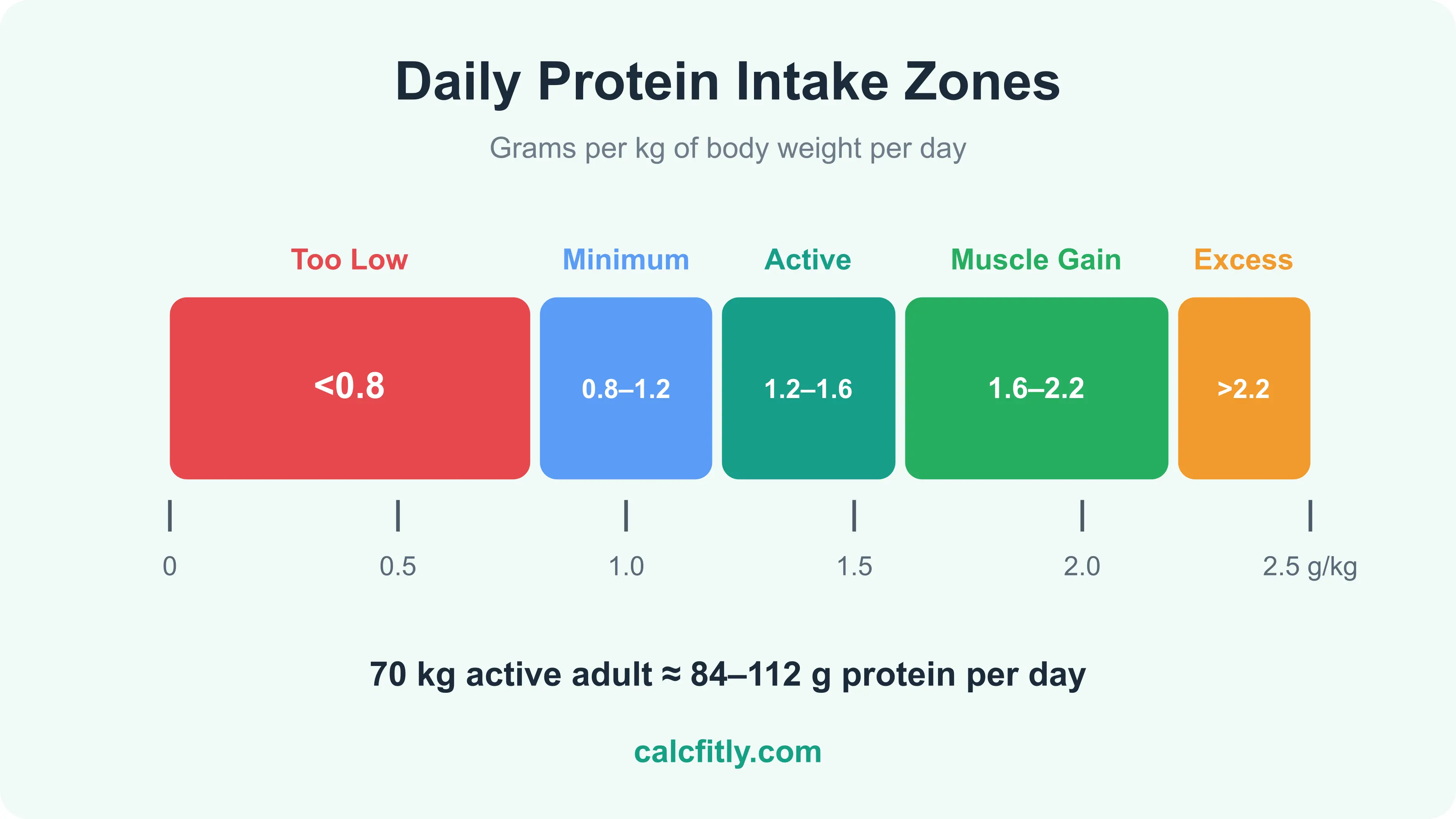
Find out exactly how much protein you need daily — for muscle gain, fat loss, or simply staying healthy.
The building block of muscle — and the most important macro to get right.
Your protein needs depend on two things: how active you are and what your goal is. Here's what the research supports:
Notice something? Whether cutting or bulking, the target barely changes. High protein is almost always the right answer.
| Food | Protein | Notes |
|---|---|---|
| Chicken breast | 31 g | Lean, versatile, cheap |
| Whey protein (scoop ~30 g) | 24 g | Fast, convenient post-workout |
| Fish (salmon, tuna) | 20–25 g | Plus omega-3 fats |
| Eggs (2 large) | 12 g | Complete amino profile |
| Greek yogurt | 10 g | Great snack or breakfast |
| Paneer | 18 g | Popular vegetarian option |
| Tofu | 8–15 g | Complete plant protein |
| Lentils / Dal (cooked) | 9 g | Plus fiber and iron |
Total daily intake matters far more than timing — but a few simple habits help:
Hitting your target on a plant-based diet is absolutely possible — it just takes a bit more planning:
Quick answers to common protein questions.
For sedentary adults, the minimum is 0.8 g per kg of body weight. For active people and muscle building, research supports 1.6–2.2 g per kg. A 70 kg person training regularly needs roughly 112–154 g daily.
Research consistently shows 1.6–2.2 g per kg of body weight daily maximizes muscle growth when combined with resistance training. More than this provides little extra benefit for most people.
For healthy people, high protein intakes (up to 2.5–3 g per kg) appear safe in studies. People with existing kidney disease should consult a doctor first. The main downside of excess protein is simply that it crowds out other nutrients.
The idea that you can only absorb 30 g per meal is a myth — your body absorbs nearly all protein you eat. However, for optimal muscle building, spreading intake across 3–5 meals of 20–40 g each works better than one large serving.
Top sources include chicken breast (31 g per 100 g), eggs (6 g each), Greek yogurt (10 g per 100 g), fish, paneer, tofu, lentils, and whey protein powder. Mixing animal and plant sources covers all essential amino acids.
Slightly. Plant proteins are a bit less digestible, so vegetarians and vegans may benefit from aiming 10–20% higher and combining sources (like dal with rice) to get complete amino acid profiles.
No. All calculations run entirely in your browser. Your details and results are never stored or sent anywhere.
Now get your full protein, carb, and fat breakdown for your calorie target.
Try Macro Calculator — Free