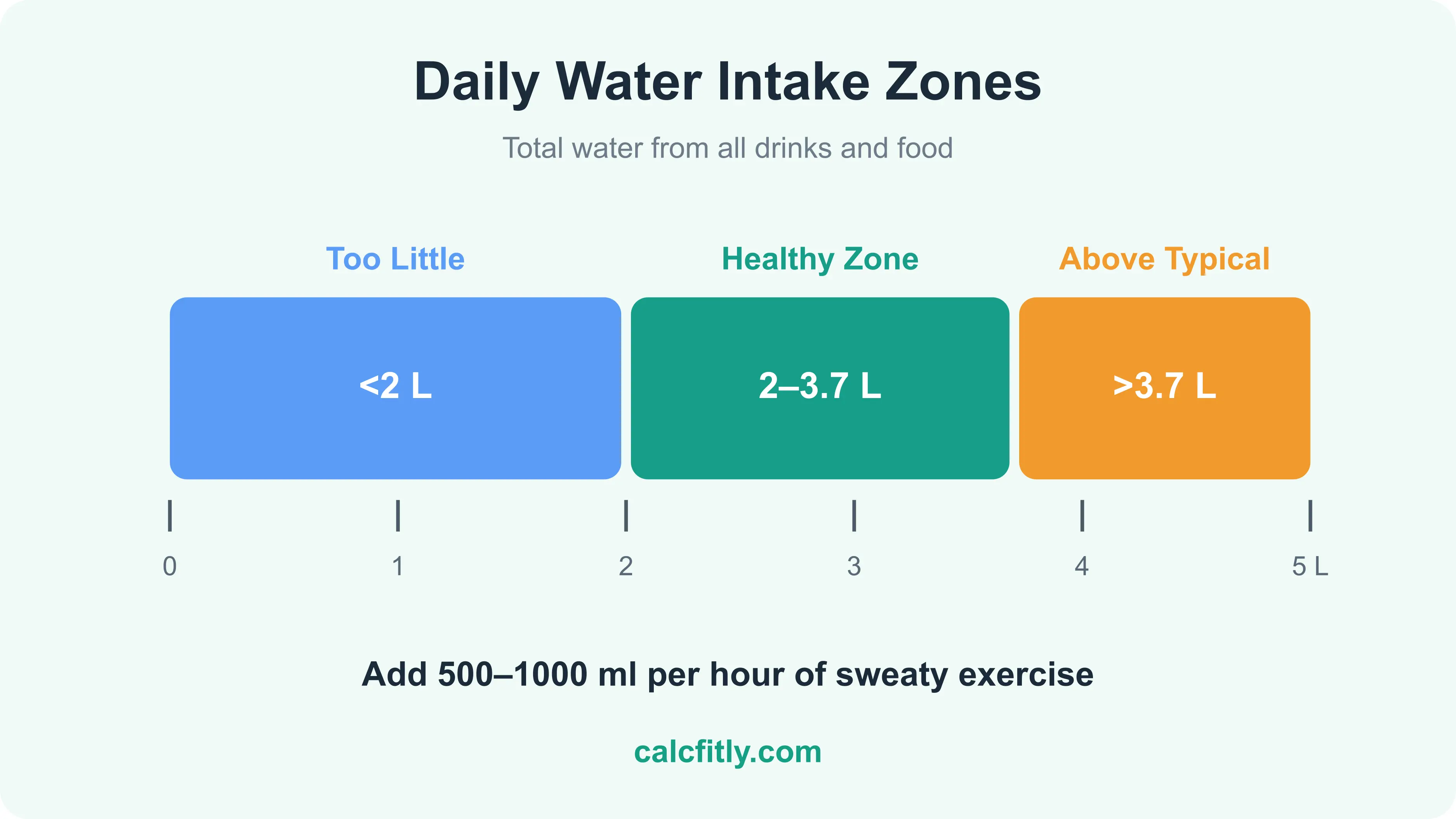
Find out exactly how much water your body needs daily — based on your weight, activity, and climate.
Why water is the most underrated performance tool you have.
This calculator starts with the most widely used baseline: 33 ml of water per kg of body weight. A 70 kg person therefore needs about 2.3 liters as a foundation. From there, we add adjustments for the three biggest factors that increase fluid loss:
Your body is roughly 60% water, and even mild dehydration (1–2% of body weight) has measurable effects:
| Body Weight | Base Daily Water | With 1 hr Exercise |
|---|---|---|
| 50 kg (110 lbs) | ~1.7 L | ~2.2 L |
| 60 kg (132 lbs) | ~2.0 L | ~2.5 L |
| 70 kg (154 lbs) | ~2.3 L | ~2.8 L |
| 80 kg (176 lbs) | ~2.6 L | ~3.1 L |
| 90 kg (198 lbs) | ~3.0 L | ~3.5 L |
| 100 kg (220 lbs) | ~3.3 L | ~3.8 L |
Remember: about 20% of your fluid comes from food (fruits, vegetables, soups), so you don't need to drink every single milliliter.
Quick answers to common water questions.
A common guideline is 30–35 ml per kg of body weight. For a 70 kg person, that's about 2.1–2.5 liters daily. Exercise, hot weather, and pregnancy increase your needs.
The "8 glasses" rule (about 2 liters) is a rough average, but individual needs vary widely. Heavier people, athletes, and those in hot climates often need significantly more. Your weight-based target is more accurate.
Yes. Despite mild caffeine, coffee and tea contribute to your daily hydration. Water-rich foods like fruits, vegetables, and soups also count — typically providing about 20% of daily fluid needs.
Yes, though it's rare. Drinking extreme amounts in a short time can cause hyponatremia (dangerously low sodium). Healthy kidneys handle about 0.8–1 liter per hour, so spread your intake across the day.
Add roughly 500–750 ml for every 30–60 minutes of moderate exercise, and more for intense or sweaty sessions. Weighing yourself before and after shows exactly how much fluid you lost.
Early signs include thirst, dark yellow urine, dry mouth, fatigue, and headache. By the time you feel thirsty, you're already mildly dehydrated. Pale yellow urine is a good sign of proper hydration.
No. All calculations run entirely in your browser. Your details and results are never stored or sent anywhere.
Get your perfect protein, carb, and fat targets to match your training.
Try Macro Calculator — Free